Lunch & Learn 09.09.2026

Lunch & Learn 09.09.2026

When & Where

Stop by our Harwich location to meet vendor reps, explore new product lines, and gain valuable product knowledge!

  • September 9, 2026
  • 10:00am - 2:00pm
  • Lunch starts at 11:00
  • Harwich Location

Visiting Vendors

  • Blue Linx
  • Coastal Forest Products
  • Simpson Strong-tie
  • Woodgrain/Huttig
  • Upstate Door

What's for Lunch

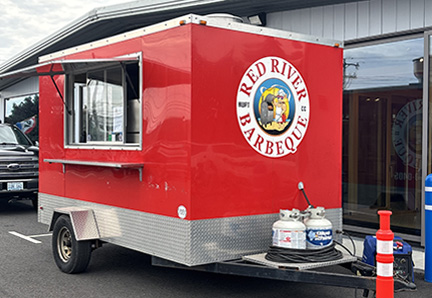
Red River Barbeque

Authentic barbecue experience from Red River Barbeque in Harwich Port

Check out the 30th Anniversary Edition of the Boston Design Guide!

Check out the 30th Anniversary Edition of the Boston Design Guide!

Honoring three decades of design excellence in New England! 🥂✨

We are thrilled to be featured throughout the 30th Anniversary Edition of the Boston Design Guide.

Congratulations to Melanie Perillo and a huge thank you to Lisa Fabiano and the entire BDG team for 30 incredible years of highlighting the region’s finest architecture, design, and craftsmanship—and for being such an outstanding media partner to SBS OneSource.

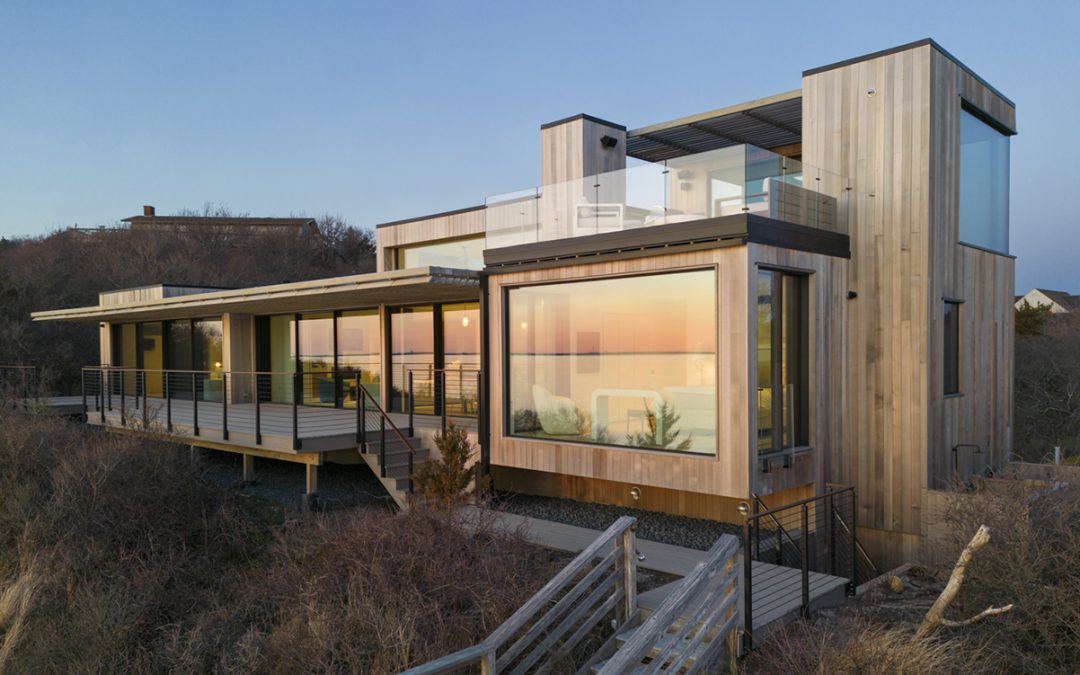
Flip through the latest issue to see our feature highlighting world-class architectural window and door solutions, from Loewen, panoramah! and more:

Loewen – Page 79
Unilux – Page 168
Panorama – Page 205
Norwood – Page 311
FoldUp – Page 324
Loewen Back Cover

📍 Visit our showrooms in Harwich, Pembroke, or Vineyard Haven (by appointment) to bring your next project to life.


From the Japanese Shoji to the sliding glass doors in Southern California

From the Japanese Shoji to the sliding glass doors in Southern California

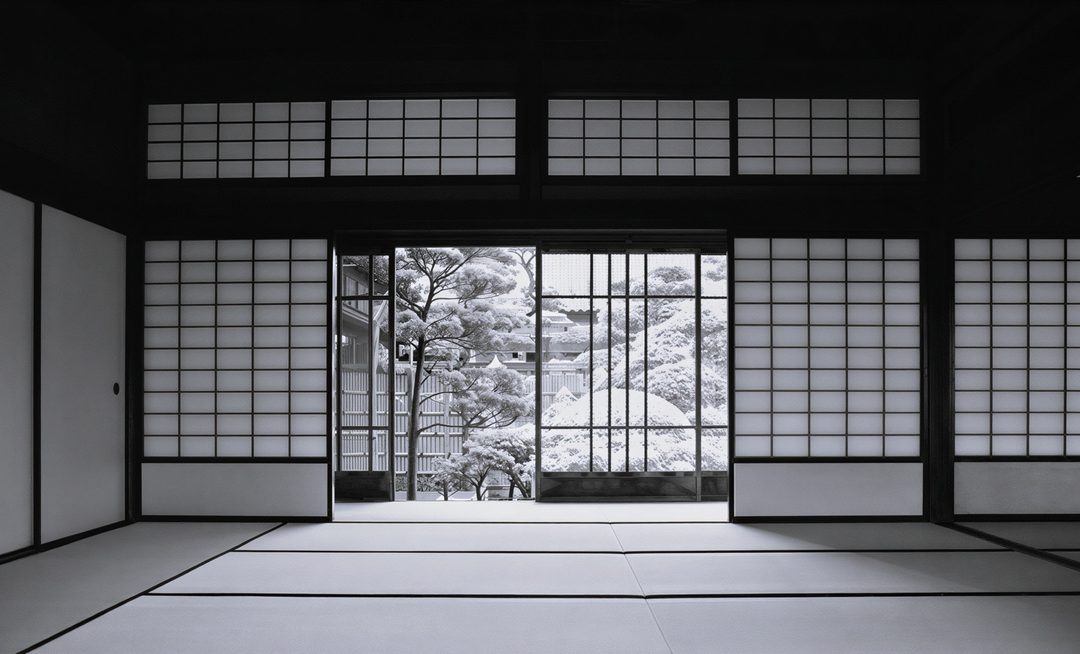
If the horizontal sliding window was relatively little used in Western architecture up to then, sliding elements are a constant of Traditional Japanese Architecture.

In fact, the Japanese timber post-and-beam system provides great freedom for the organisation and relationship of spaces, enhanced by the use of partitions made up of removable sliding panels. As a consequence the various interior compartments easily become a large undifferentiated and fluid space. Their application in the outer perimeter, on the other hand, allows the façade to open promoting a fusion between interior and exterior. The use of sliding panels composed of a wooden structure – shōji and fusuma³⁴ – whose filling was made of rice paper or cloth – allowing people to see out when open and only to admit light when closed – became therefore very popular. Glass panes only began to be introduced at the end of the 19th century³⁵.

Frank Lloyd Wright, deeply influenced by Japanese architecture³⁶, became interested in these elements, which he described in his Autobiography.³⁷ In his work he adopted the use of long ribbons of
windows, as early as the Prairie Houses in Chicago (1893-1910), since this layout allowed a great relationship between interior spaces and nature outside. This architectural approach, then uncommon in Europe, was especially well received in Southern California because of its particularly temperate weather. In fact, glazing was still a long way from providing a suitable thermal response, so it was mild climate that opened the way to the “picture windows” and “glass walls” of ranch houses.³⁸

It was also in California that, from 1919, Wright designed and built a series of houses with courtyards, large glazed surfaces and mitred glass windows. Although Wright did not favour sliding solutions –
preferring the coplanarity of casement windows – the same was not true for his Viennese collaborator Rudolph M. Schindler. Indeed, since his very first works, Schindler made an extensive use of sliding
glass doors.³⁹ At Kings Road House in West Hollywood (California, 1921-22), he adopted a single-story structure with a direct relationship with the exterior through sliding patio doors composed of a timber frame filled with glass or canvas.

Sliding doors at Schindler’s residence in West Hollywood (1921-22).
Originally the sliding frames were filled with canvas.
Above: Photo by Julius Shulman, 1953.
Below: Photo by Julius Shulman, 1991.
© J. Paul Getty Trust. Getty Research Institute, Los Angeles (2004.R.10).


34. Shōji are translucent panels of sliding or, later, folding screens. Fusuma are opaque sliding panels, sometimes decorated with paintings.
35. See on this subject “Absorbing Modernity: Japan’s Glassmaking Tradition” in Rem Koolhaas, AMO, Harvard Graduate School of Design, James Westcott (ed.), Elements, Marsilio, 2014, pp. 682-683.
36. Frank Lloyd Wright had contact with Japanese architecture at the age of 26, through the Pavilion Ho-o-den (Phoenix) Pavilion at the World’s Fair Exposition of 1893 in Chicago. He later visited Japan in 1905, became a collector and dealer of Japanese art and built the Imperial Hotel in Tokyo (1919-23). All these encounters led him to revolutionise domestic architecture according to Japanese principles, not only in the adoption of naturalistic motifs and in the use of screens, but also in the organisation of open plan interior spaces and, particularly, in the promotion of an intense internal-external relationship in his architecture.
37. “The sliding paper shoji, or outside screens that serve in place of windows and enclose the interior room spaces (they are actually the outside walls), all slide back into a recess in the walls. They too are removable.” Frank Lloyd Wright, An Autobiography, Pomegranate Communications, p. 196 (first published in 1943 by Duel, Sloan and Pearce).

 
2nd Annual Customer Appreciation Golf Tournament

2nd Annual Customer Appreciation Golf Tournament

2nd Annual Customer Appreciation
Golf Tournament

October 6th, 2026 (8th rain date) • Waverly Oaks Golf Club
444 Long Pond Road • Plymouth, MA 02360

Save the Date!

Ready for another round? We’re hosting our 2nd Annual Customer Appreciation Golf Tournament at Waverly Oaks Golf Club! We want to express our profound gratitude to the builders and architects that make SBS their OneSource for building materials and architectural windows and doors.

Lunch & Learn 06.24.2026

Lunch & Learn 06.24.2026

When & Where

Stop by our Harwich location to meet vendor reps, explore new product lines, and gain valuable product knowledge!

  • June 24, 2026
  • 10:00am - 2:00pm
  • Lunch starts at 11:00
  • Harwich Location

Visiting Vendors

  • Blue Linx
  • Coastal Forest Products
  • FastenMaster
  • Kebony Decking

What's for Lunch

Grillmaster Sweeney!

Join us as grill master Bill Sweeney cooks for the crowd at SBS OneSource in Harwich.